April Catalogue: A Case Study with Cottage Noir
A selection of artworks for this iconic North London home under £10K


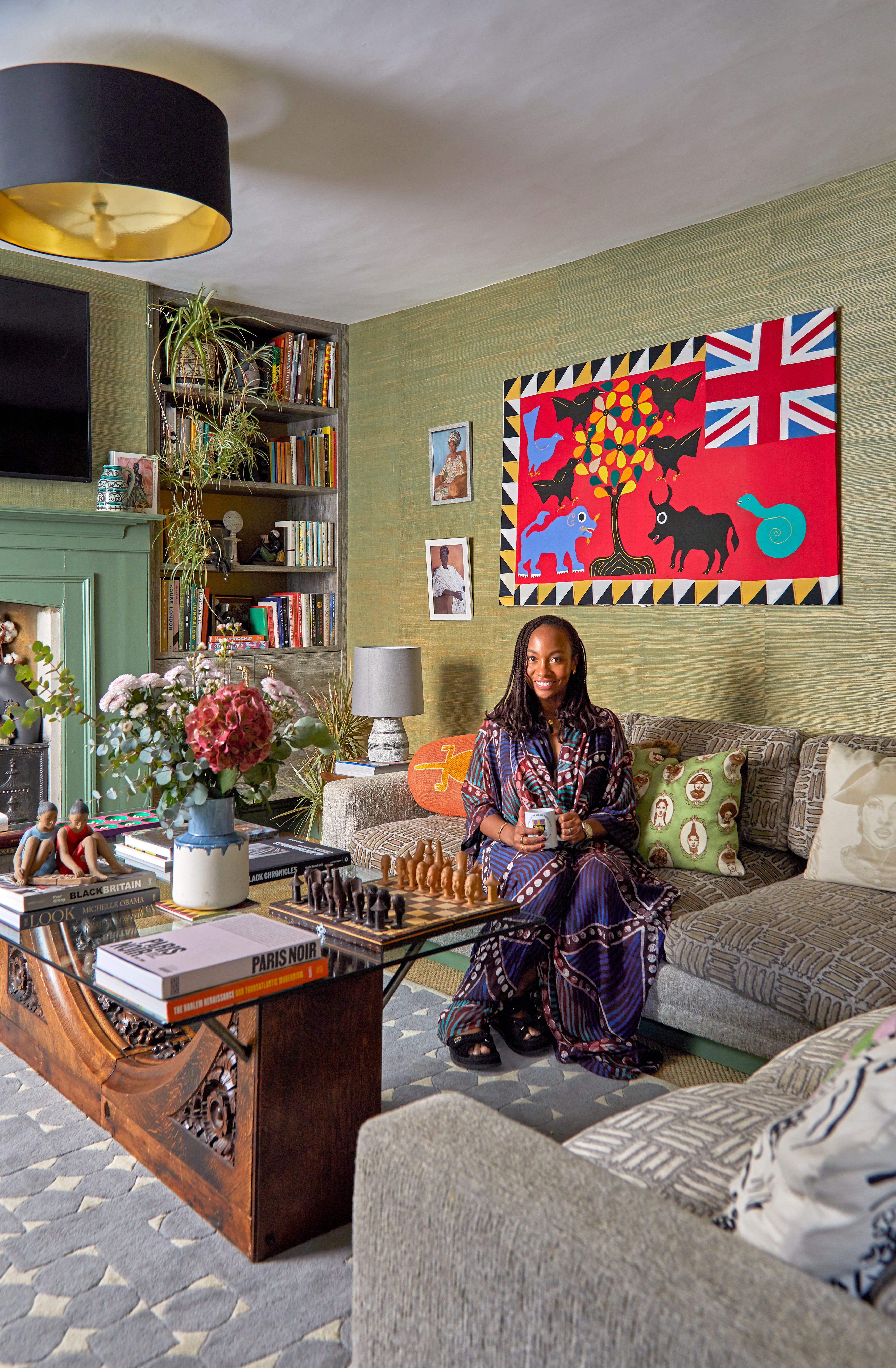
Substack has been a treasure trove, connecting me to curious, like-minded people who want more than the algorithm gives them. One of those people is the inimitable Kemi Lawson of Cottage Noir who tells stories about home, specifically exploring what makes a Black home. It’s a question that sits at the heart of my practice too — most of my clients are buying art to live with, works that make a space feel intentional and entirely their own.
For April’s catalogue, I’m taking you inside Kemi’s much-admired 18th-century North London home and suggesting artworks I believe would sit beautifully within it — pieces that speak to the natural energy of the space and the themes closest to Kemi’s heart. Think of it as art advisory, in situ.
The Kitchen
The kitchen might be a weird place to start — but it often functions as the heart of so many Black homes. At my grandmother’s in Queens, where I felt most at home growing up, the kitchen was the center of everything: conversation, shared secrets, laughter, discipline, the passing down of history and community. An open door leading right to the kitchen, for anyone to be fed — morning, day, or even the deepest darkest hour of the night.
In the Cottage Noir kitchen, Kemi has commissioned a gorgeous mosaic backsplash featuring ackee fruit and Scotch Bonnet pepper — ingredients shared between West Africa and the Caribbean, as much a part of one home as the other. In the kitchen’s many pockets of wall space, I think this sculptural still life of collard greens and okra by LaKela Brown would sit perfectly.
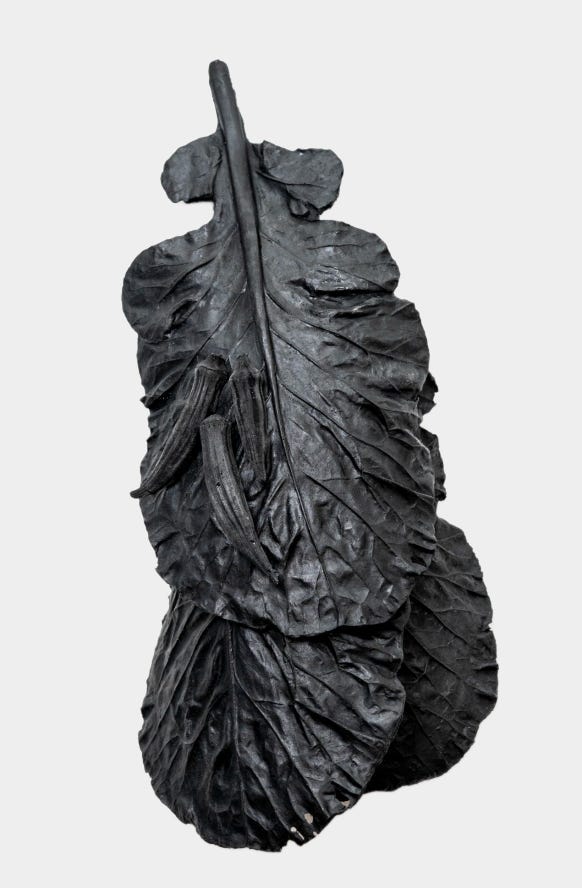
Food is ancestral memory — and Brown’s sculptural relief works evoke ancient art forms, from hieroglyphic wall carvings to cuneiform relief tablets. By rendering these botanical heritages in deep black, she invokes the language of preservation and monumentality, suggesting that these plants are not ephemeral but artefacts of enduring cultural history. Although these vegetables are strongly rooted in Black American food history, okra and collard greens (or callaloo in Jamaica) are beloved across the diaspora, ingredients that make us feel closer to each other through every dish.
This work marks a pivotal moment in LaKela Brown's practice — moving away from works cast in all white, her first body of work in all black marks a significant shift, and with two museum shows arriving this year, these works will be looked back on as iconic within her larger career. Email Talia to acquire.
The Bathroom


Now enter the bathroom — Kemi has incorporated beautiful hand-painted ceramic tiles depicting Black women with different hairstyles, centering care and creative self-expression. The bathroom is notoriously difficult to hang artwork in due to the risk of water damage, making sculpture the ideal choice for the space. In that same spirit of self-care and ritual, I’ve selected this sculptural incense holder by Karina Sharif.
Sharif makes sculptures inspired by the stories of her Jamaican maternal ancestors — transforming family memory into physical objects that feel both spiritual and deeply personal. She works with ceramic, steel, paper and found family objects, embedding stones she collected with her mother by the sea into lamps, beaded totems and even incense holders. Everything she makes feels like something inherited — each one carrying a message, a blessing, a piece of someone who came before.
Email Talia to acquire.
The Stairwell
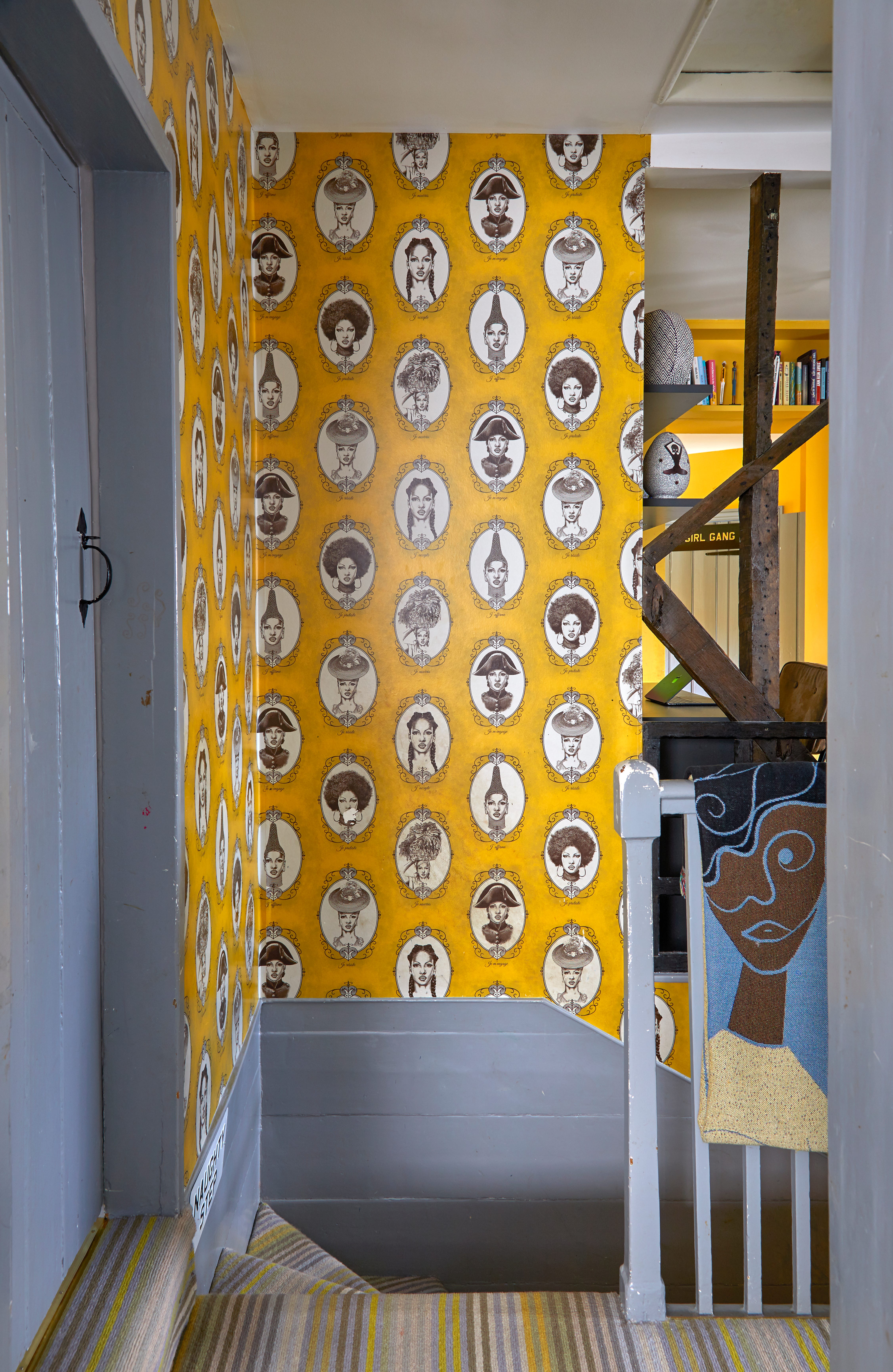
The stairwell in Cottage Noir is not an afterthought but a focal point. Sitting just outside her daughters’ room, this custom wallpaper celebrates different eras of Black womanhood — from the Benin era to the US Civil Rights Movement, to a spy in the Haitian Revolution — designed to inspire every woman who walks through, and her daughters, every single day. The work placed here needs to be equally intentional and weighty: not to overshadow the wallpaper but to enhance and complement it. Who better than Umar Rashid.
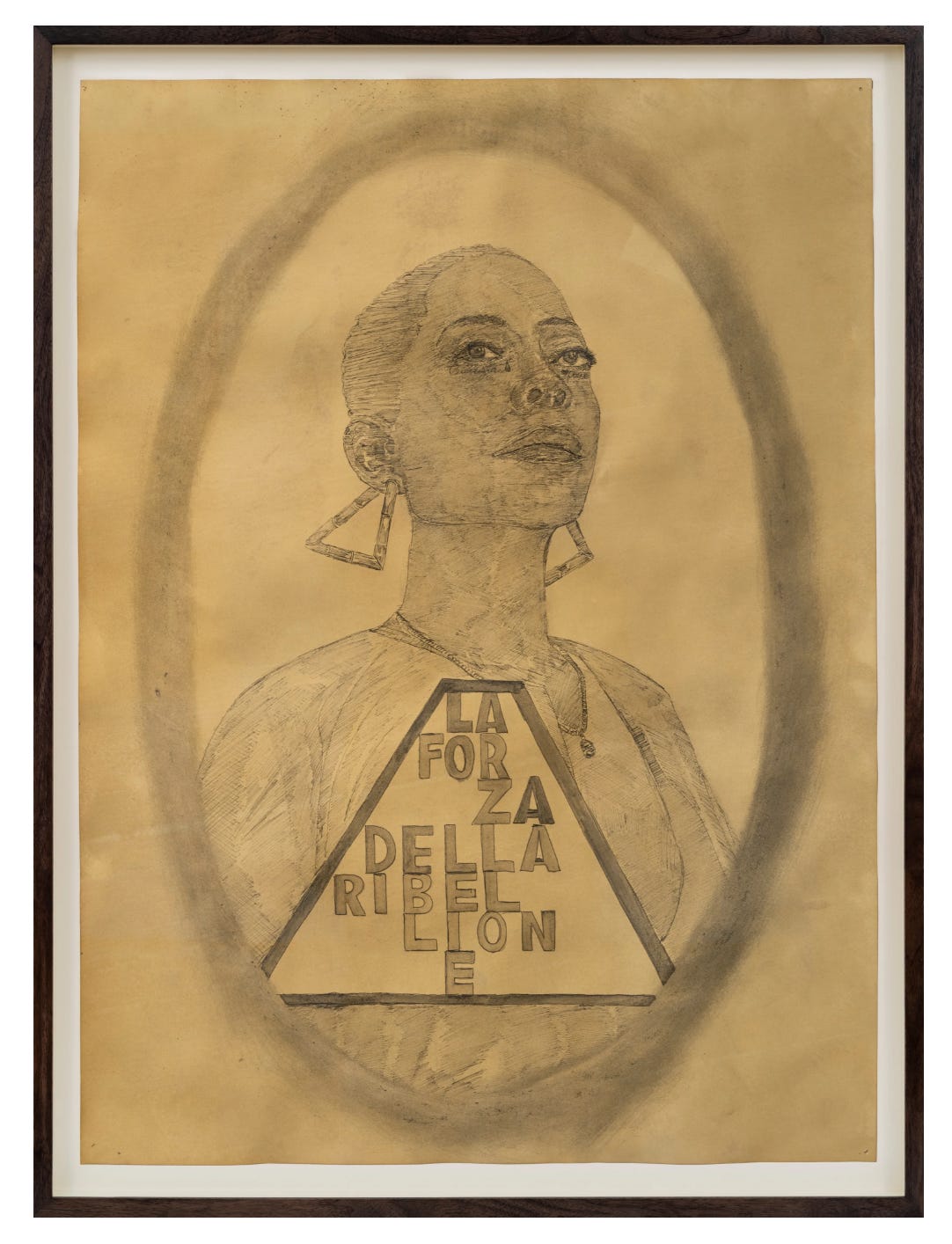
For over two decades, Rashid has been building an entirely fictional world empire — documenting its wars, political intrigues and colonial exploits with the obsessive detail of a historian, except that history here is radically reimagined, collapsing race, class, gender and power into a parallel universe where the rules of the real world no longer apply. His work offers a revisionist lens on empire and modernity that is as playful as it is pointed. This portrait of an unknown woman steps directly into the spirit of that wallpaper — another Black woman, proudly shaven-headed, her beautiful bamboo door-knocker earrings placing her in time, bold in her stance, holding her place in history whether history books record her or not.
Email Talia to acquire.
The Kid’s Room
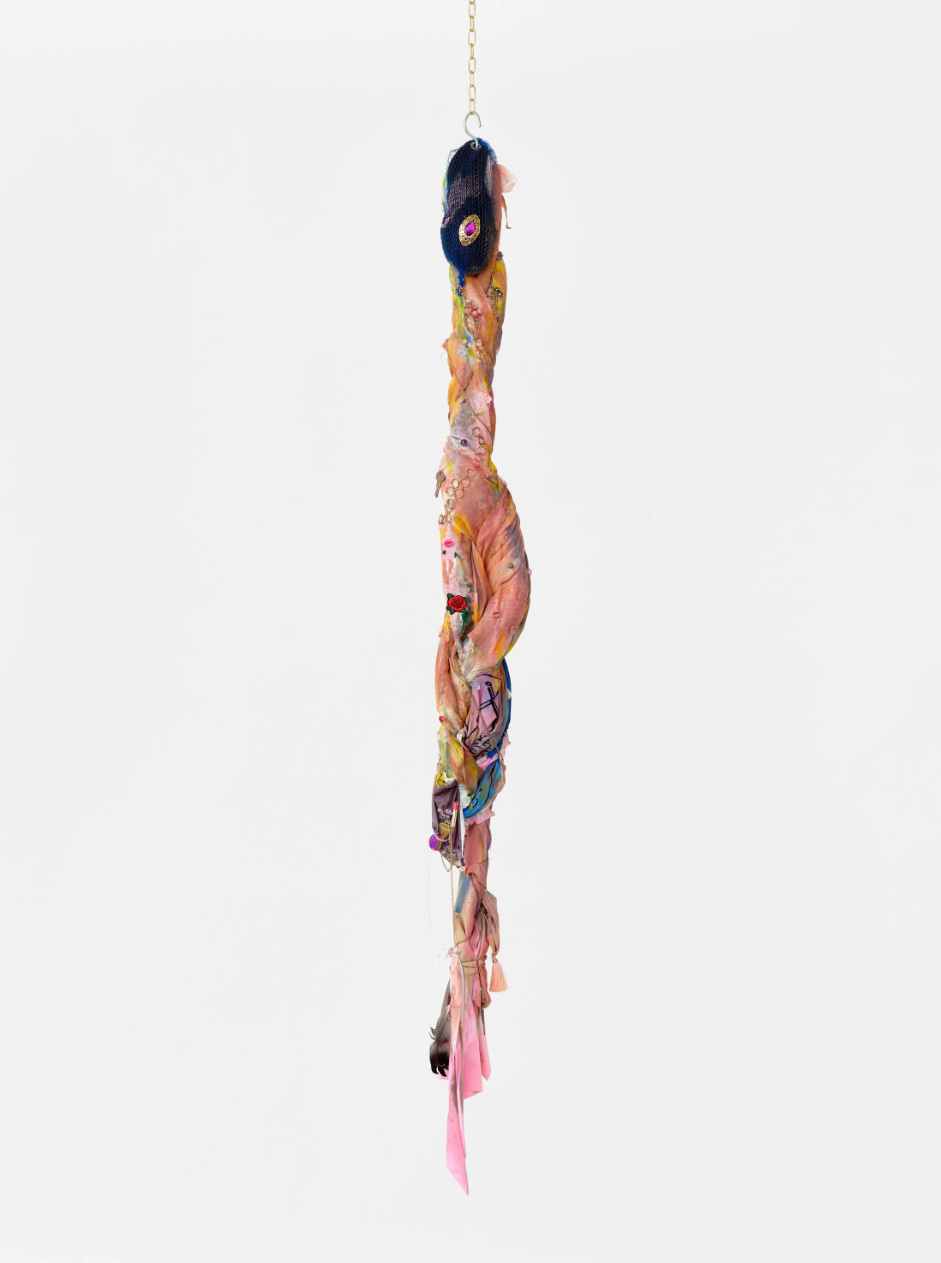
The stairwell leads into Kemi’s daughters’ room, just adjacent. Their room features a majestic wallpaper — a mountain of mattresses reminiscent of the Princess and the Pea — and to add to the mystique, I’d like to focus on the Haitian artist Gaëlle Choisne, whose work centers on Pan-African ancestral spiritualism.
Through assemblage, Choisne draws on Caribbean and African spirituality to guide us in an exercise of inhale and exhale — as she says: “breathing has become a luxury, a spiritual wealth too often denied to those living under oppression or fear.” Charm for Humanity is one of my favorite works by the artist: a totemic hanging textile adorned with charms, gems and feathers, blessed by Choisne with the vibrational energy of purification and trust. This totem belongs in a child’s room — a blessing, hanging quietly overhead as they grow into the women they are becoming, navigating the world at large.
Gaëlle Choisne is a highly institutional artist who has shown in museums around the world. She is mentored by and has exhibited alongside Lorna Simpson. Email Talia to acquire.
The Parent’s Bedroom
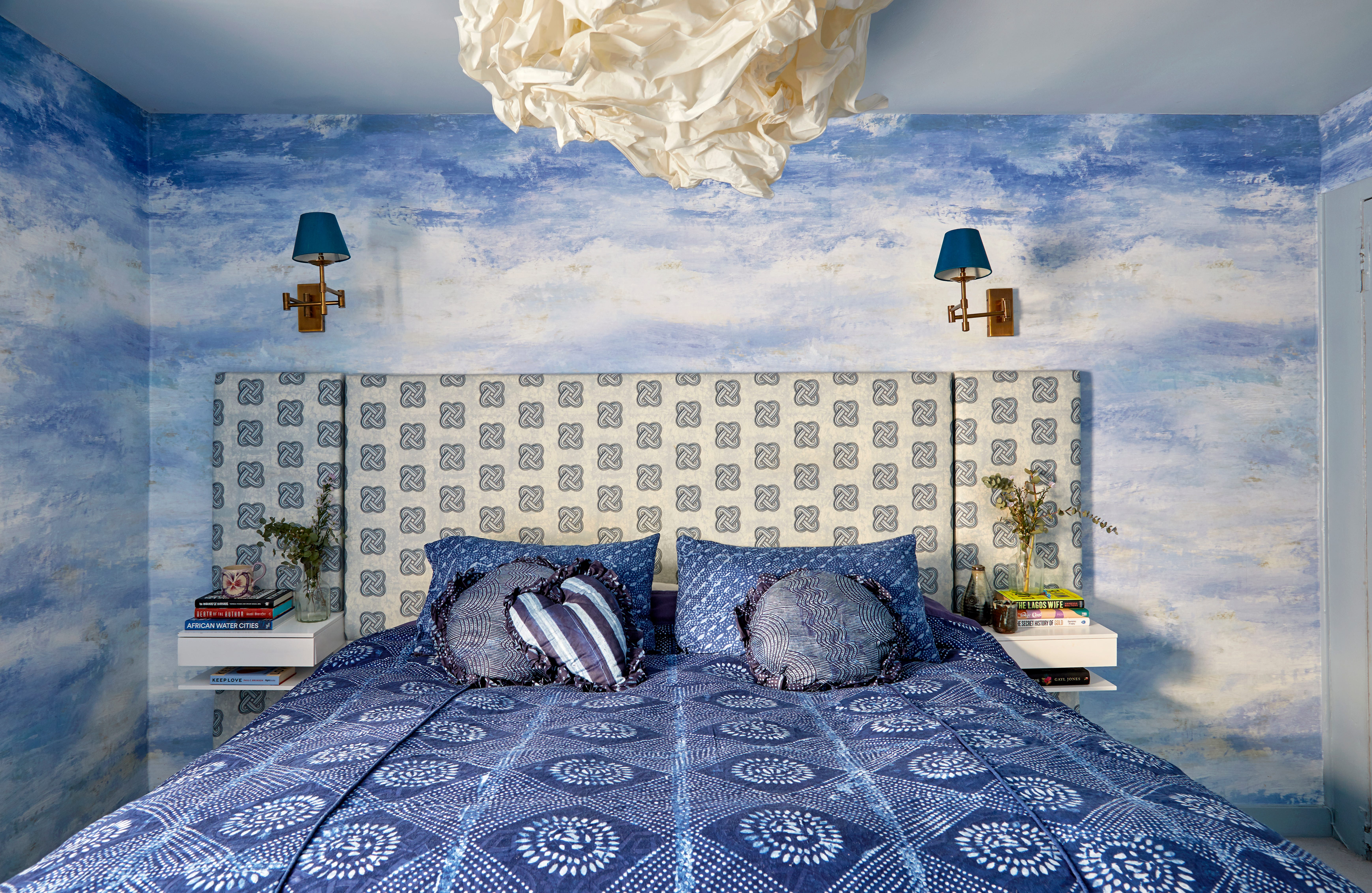
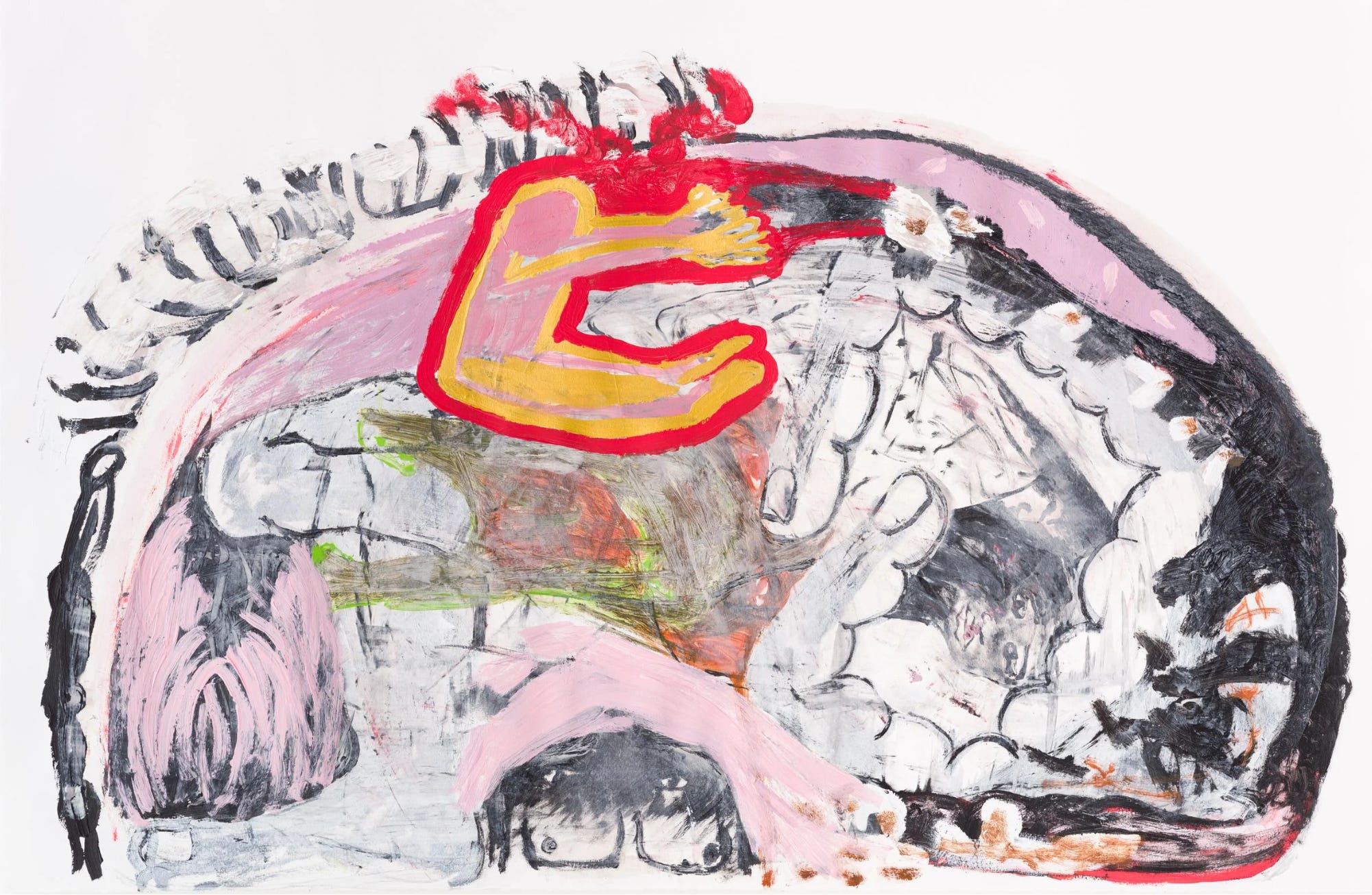
The parent’s bedroom in Cottage Noir is especially intentional. Its anchor is a letter from Kemi’s husband’s family — a written welcome into the family. To complement and confirm that embrace, this work on paper by Virginia Chihota sits in perfect conversation with it.
For her debut European institutional solo at the Centro Andaluz de Arte Contemporáneo in Seville, Chihota places Kupinduka at the core of her practice. In Shona, the word suggests a turning — a shift of state, a passage into the spiritual realm to carry a message. Not merely change, but a rupture in which the self unsettles, transforms and speaks from another register.
Marriage is one of the most profound acts of Kupinduka there is. You enter it as one thing and emerge as another, carrying everything you were while becoming something you couldn’t have imagined alone. To place Chihota’s work in this bedroom is to place a meditation at the heart of the home — on what it means to turn toward another person, and never quite turn back.
Email Talia to acquire.
The Gallery Wall


Lastly, the living room is where I would source a selection of smaller works to continue the gallery wall. This intimate but mighty cast handmade paper by Leonardo Drew picks up the muted tones and sentiment of a striking throw bearing the phrase “the blacker the berry, the sweeter the juice”. Drew’s work is itself a meditation on Blackness as richness, as accumulation, as something that deepens rather than diminishes under pressure.
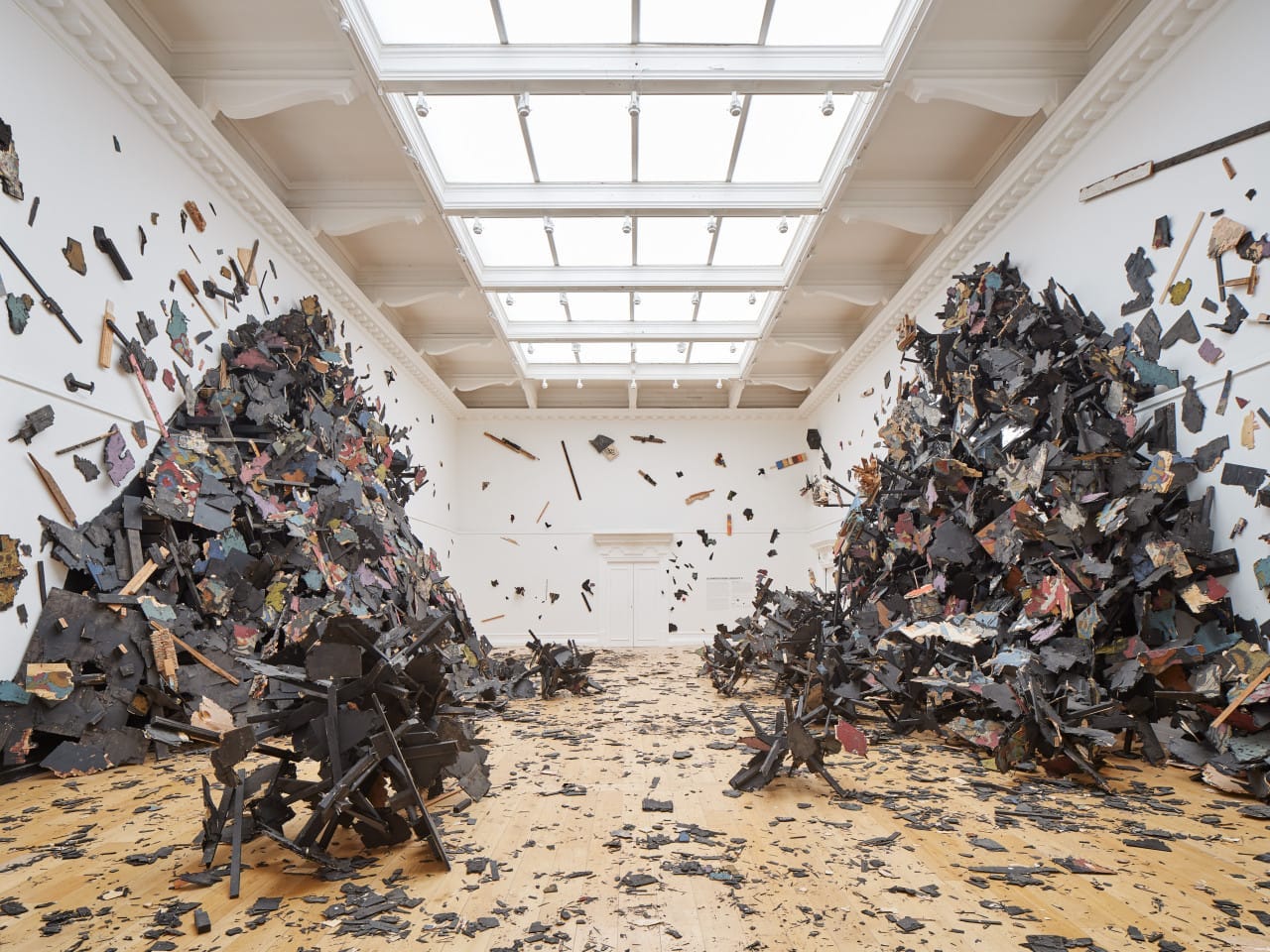
For over three decades, Drew has built a practice around the tension between order and chaos — transforming raw materials like wood, scrap metal and cotton into works that speak to decay, time and the labor of writing oneself into history. His recent show at South London Gallery pushed that language further, depicting an exploded site — fragments and remnants spread across the space as if history itself had been detonated and left to settle. There is something in that image that resonates deeply with the diasporic experience: the scattered, the salvaged, the things that survive and are made beautiful precisely because they endured. In Cottage Noir, a home so intentionally built from that same spirit, a work by Drew feels not just fitting but necessary.
Email Talia to acquire.
Now, it’s your turn — are there any spaces in your home that you want to fill with art?
Building a meaningful collection is more within reach than you might think: institutional-quality art can be found for under 10K, and starting with emerging artists isn’t just accessible, it’s visionary. The great collectors didn’t begin with the giants — they recognized them early and grew alongside them. If you’re ready to start building something truly your own, let me be your guide. Get in touch for a free consultation.
Signing off to enjoy the long-awaited sunshine,
Talia from I&I Worldwide
Check out my previous catalogues:
 | A guest post by
|
Thank you so much for preparing a curation using my home. The pieces you have selected are so thoughtful and inspiring!!