Amplifying the 'Why'
Art Fair Week in Paris: Art Basel, satellite fairs and exhibitions throughout the city

Art is an expression of life, it expands perspectives and preserves history. Three days post-Frieze, I headed to Paris for Art Basel, unaware that the trip would further crystallize my why for creating I&I Worldwide.
As a Black American living in London, the thing I miss most is the visibility of Black American art, both past and present. Yet recently, with increasing censorship and uncertainty back home, there’s been a remarkable surge across Europe. With KJM’s The Histories in London, the momentum continued in Paris like a newfound renaissance. For the first time in a long while, I felt a sparkle of joy from home.
The visibility of Black American artists abroad is not just a matter of representation, it’s an act of historical reclamation. Their presence on the global stage bridges the painful legacy of post-slavery violence in America with the enduring cultural history of Black resistance. By exhibiting outside the US, these artists expand the narrative beyond national borders, situating the Black American experience within a global continuum of struggle, creativity, and survival. Their work reminds the world that the story of Black America is inseparable from the broader history of humanity’s fight for dignity, freedom, and self-definition. At the fairs and beyond, this resistance was undeniable.
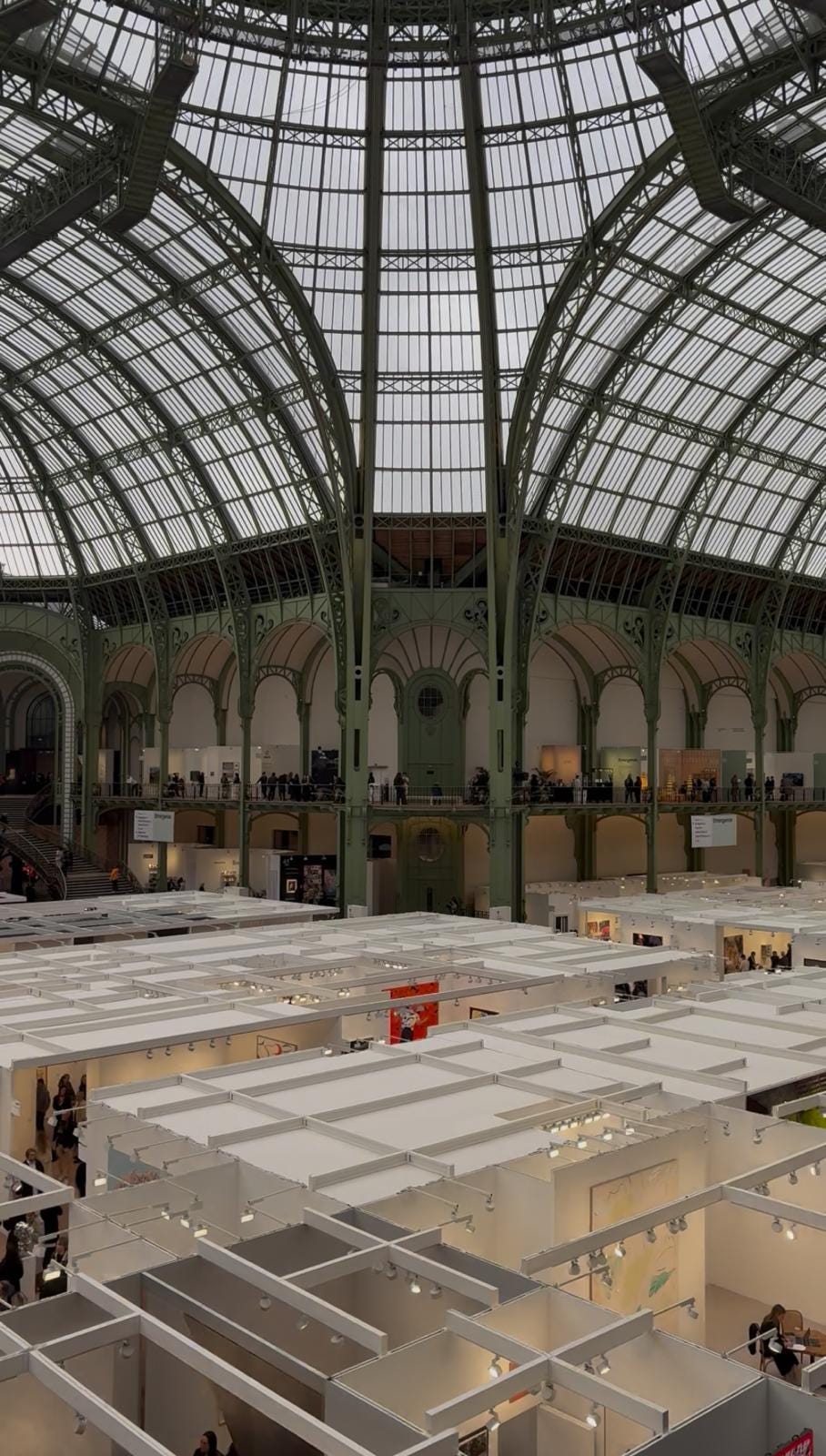
The Grand Palais is the perfect home for Art Basel Paris. An architectural masterpiece originally built for the Universal Exposition of 1900 — a showcase dedicated to the global achievements of the preceding century with a view to accelerate development into the next — the building’s historical weight only amplified its structural grandeur, offering a fitting backdrop for a contemporary art fair intent on defining what’s next in global art.
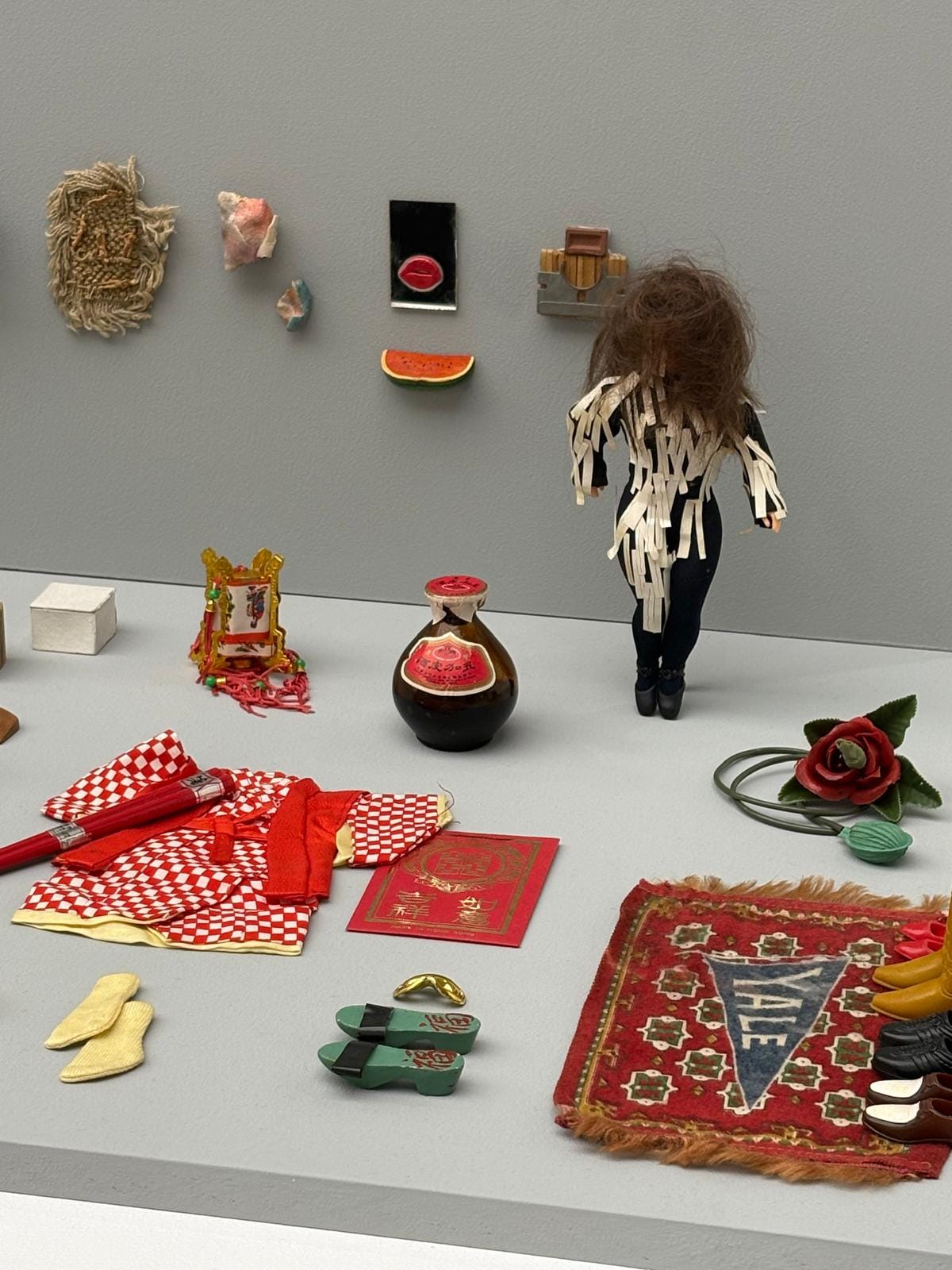
Amid the ongoing speculative doom spiral of the commercial art market, many galleries seemed to pivot toward institution-style presentations. Booths felt more like curated statements than sales floors. Our standouts were the expansive display of paintings and works on paper by Hector Hyppolite — the father of Caribbean Surrealism who paved the way for the dreamers — and the dynamic presentation of New York legend Janet Olivia Henry, whose iconic ‘Juju Box’ dioramas, photographic ‘scenographies’ and hanging ‘Juju Bag’ soft sculptures directly critique discrimination of gender, race, and class in the art world.
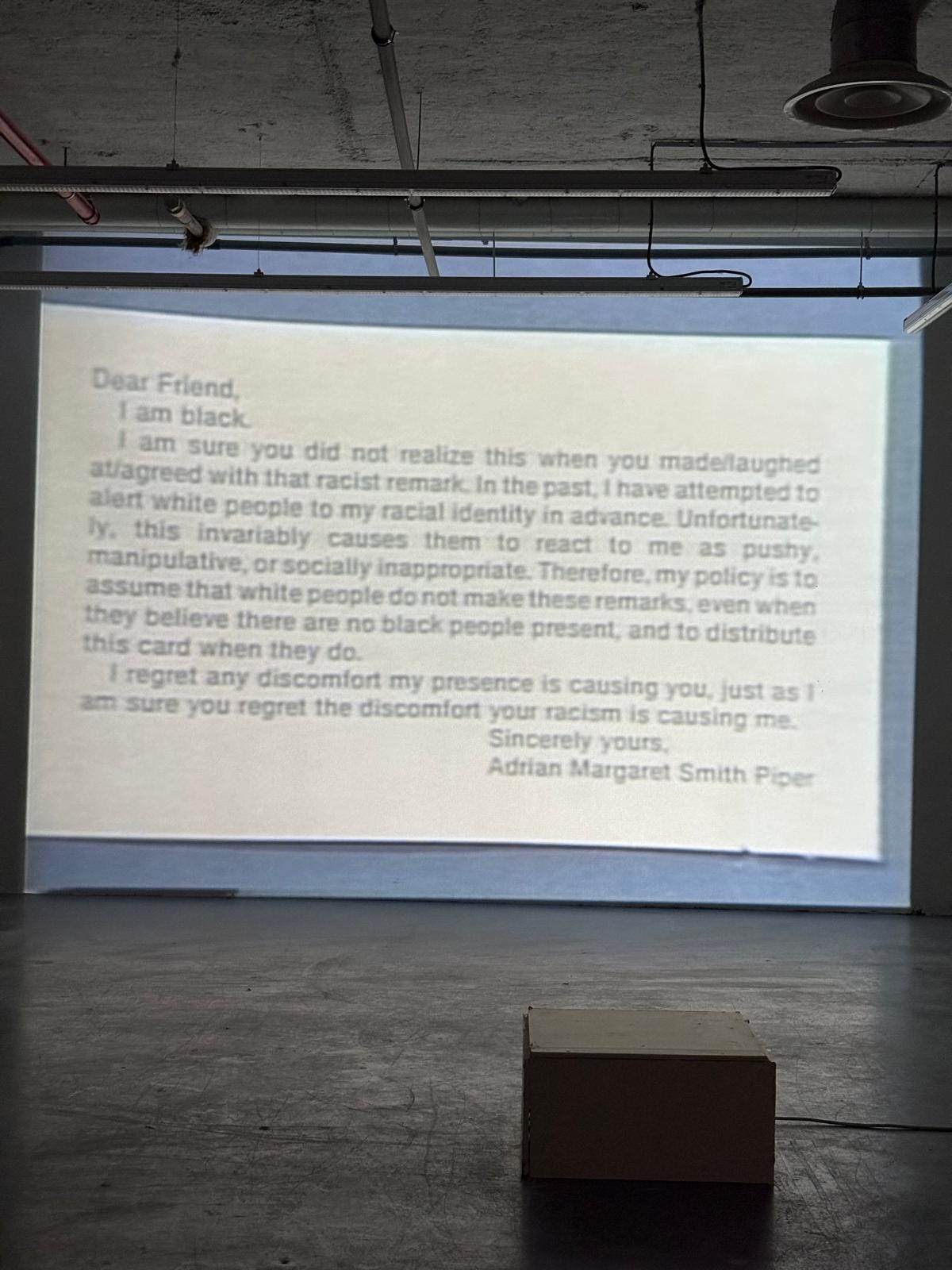
Beyond the main fair, we limited our satellite fair visits to Paris Internationale and Place des Vosges, both focused on emerging art. Across both, a clear trend emerged: the rediscovery of overlooked or underrepresented artists from the mid-late twentieth century, those who once showed alongside “so-and-so” but never received their due. This allowed us the rare opportunity to experience Adrian Piper’s My Calling (Card) #1, something I never imagined I’d see at a fair. It’s encouraging to see the art world looking backward. If only the wider world could do the same, there’s much to learn from the histories we’ve so easily forgotten.
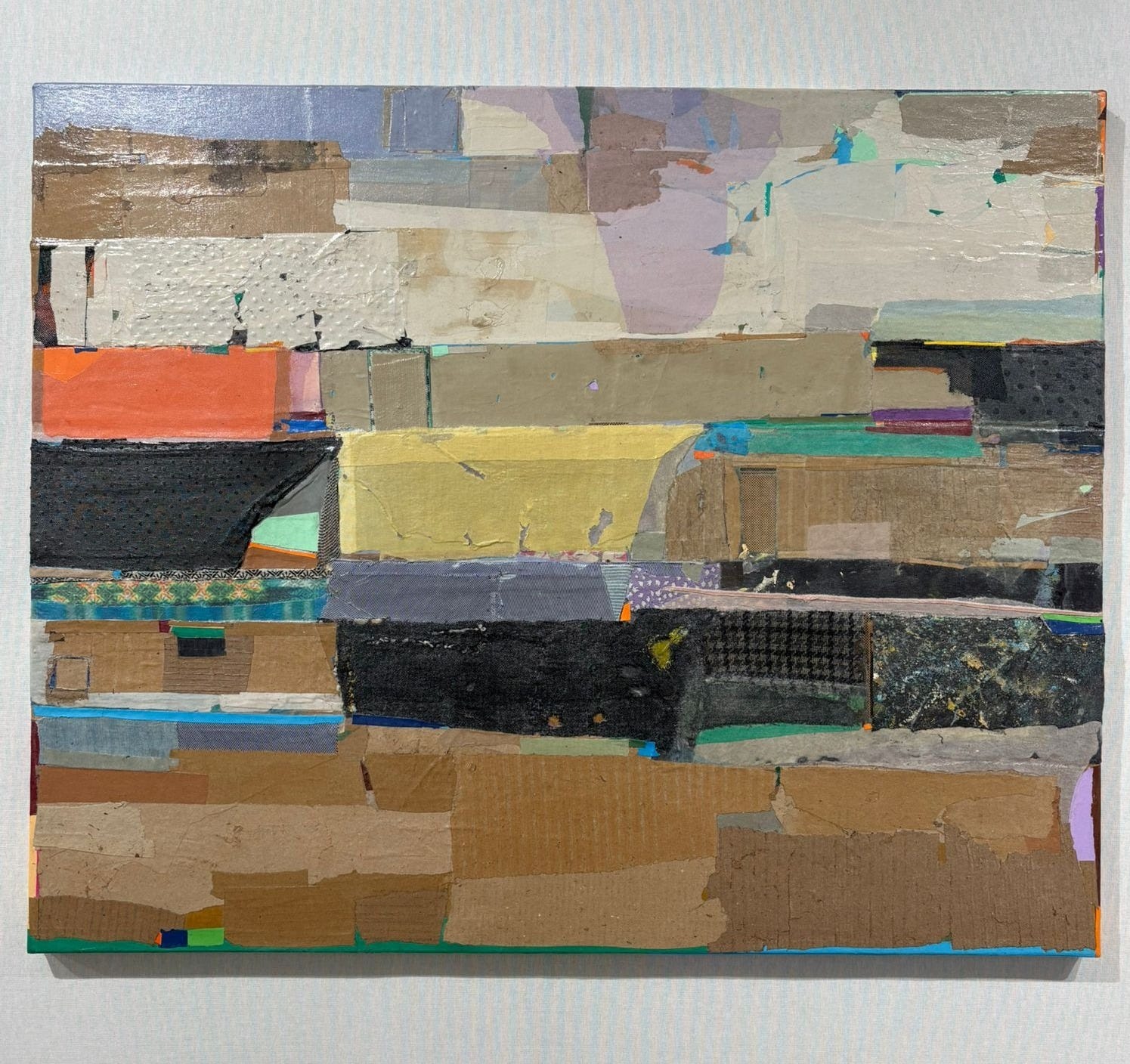
We zipped through the MENA Art Fair on our way to an event and discovered work by the Palestinian artist Mohammed Joha. He uses discarded materials of cloth, paper and carton to create layered collages that reflect the chaotic, cyclical architecture of Gaza, where buildings have been destroyed, rebuilt, and rebuilt again using whatever materials remain. Joha’s work captures the enduring reality of life under institutionalized confinement, mirroring a society caught between permanence and fragility, where temporary structures become generational homes, and survival itself becomes an act of reconstruction. Prices for his work start at 3,600 USD.
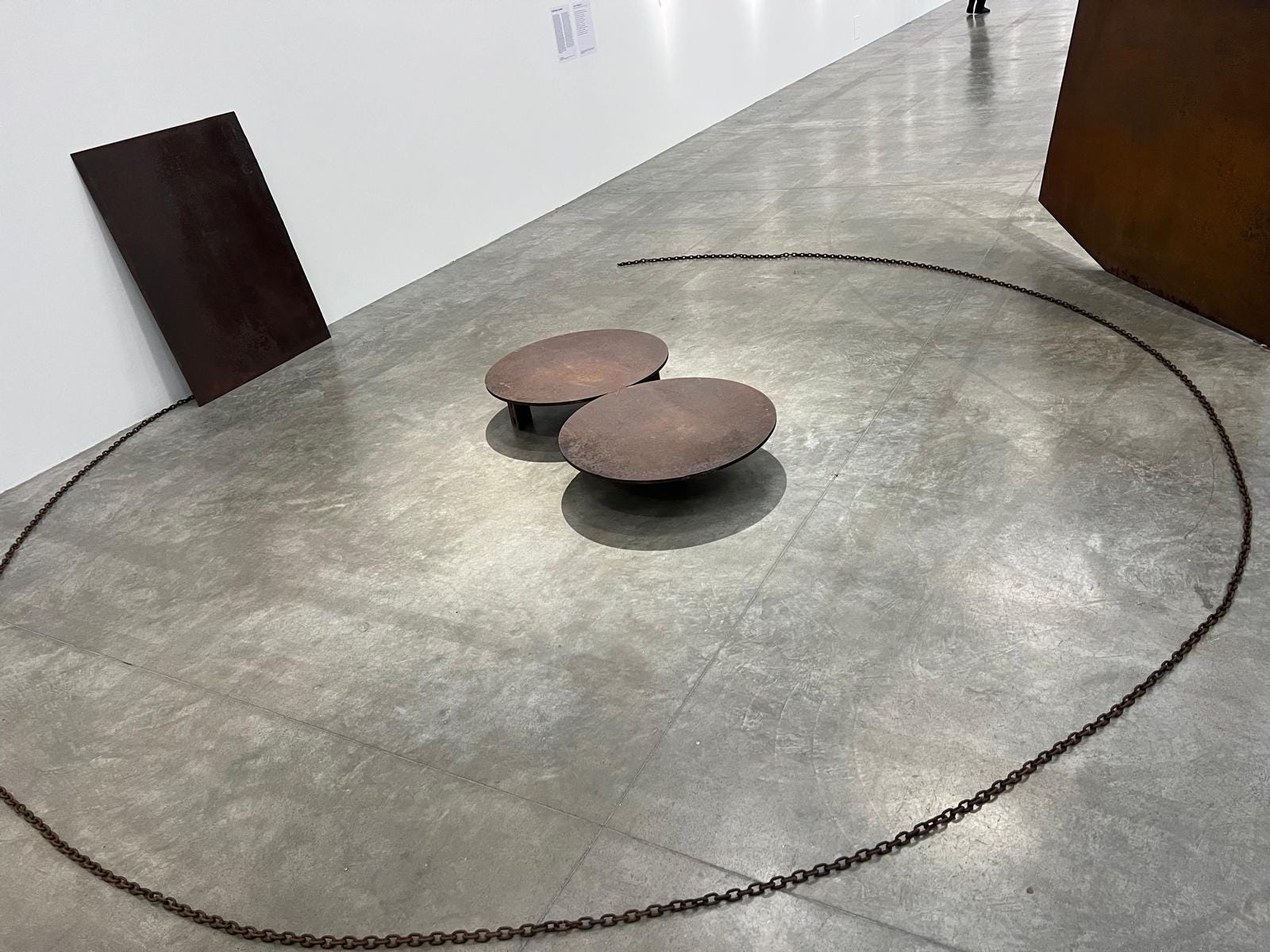
Beyond the fairs, one of the most moving moments of the trip was experiencing Melvin Edwards’ retrospective at the Palais de Tokyo, curated by Naomi Beckwith and Amandine Nana. Standing before six decades of his work felt like standing inside living history.
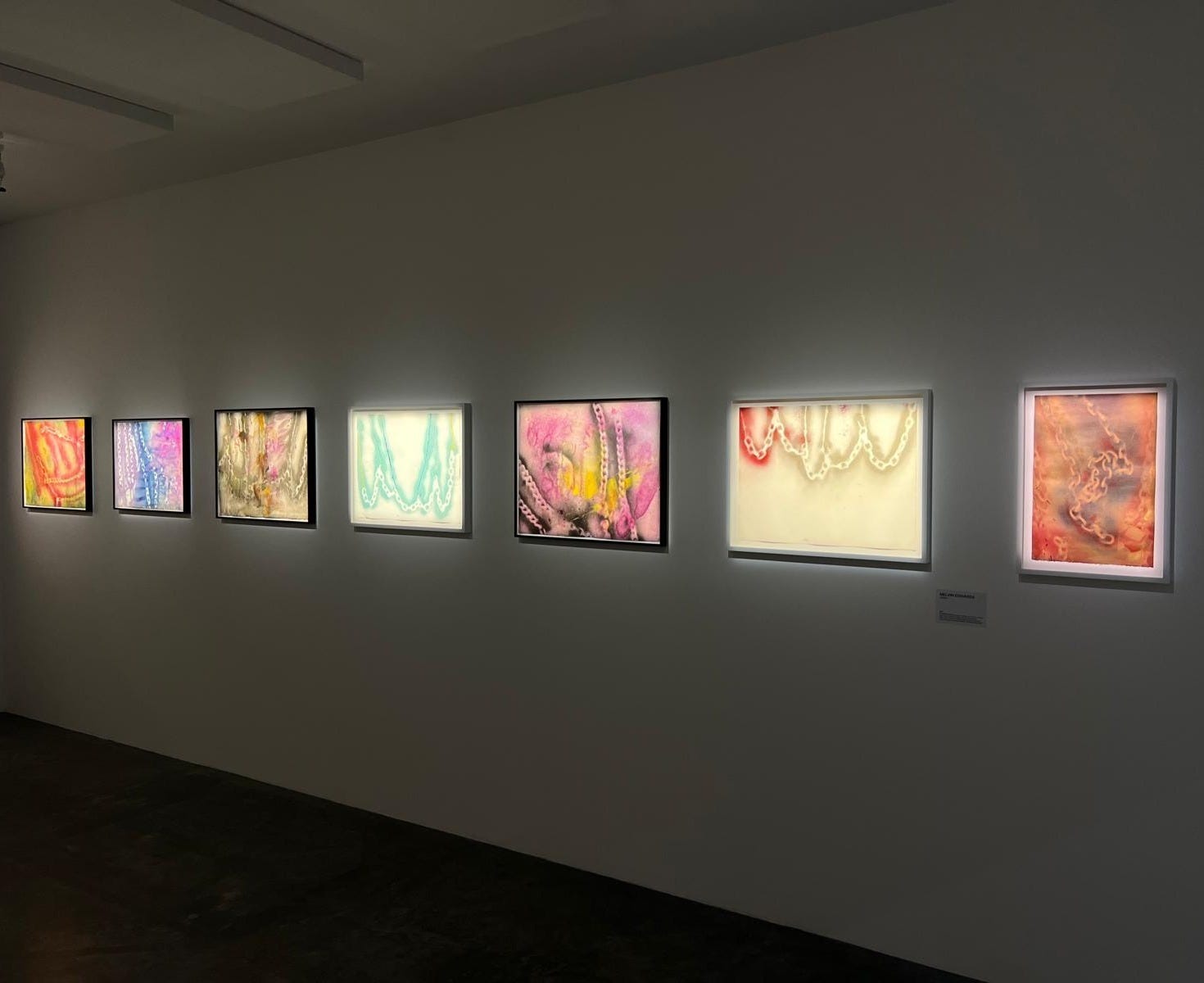
Edwards was the first Black American artist to have a solo show at the Whitney in 1970, forty years after its founding. His welded metal sculptures, often made of tools, chains and barbed wire, are an expression of life and shared resistance. His Lynch Fragments emerged as a visceral response to the violence of the Civil Rights era, yet his practice extends far beyond the Black American experience. Having lived and worked across the US, Europe, Dakar, Nigeria and other parts of Africa, Edwards’ work embodies a global language of struggle and resilience.
His belief that every aspect of life is worthy of expression feels especially urgent today, when so many are still fighting to be seen.
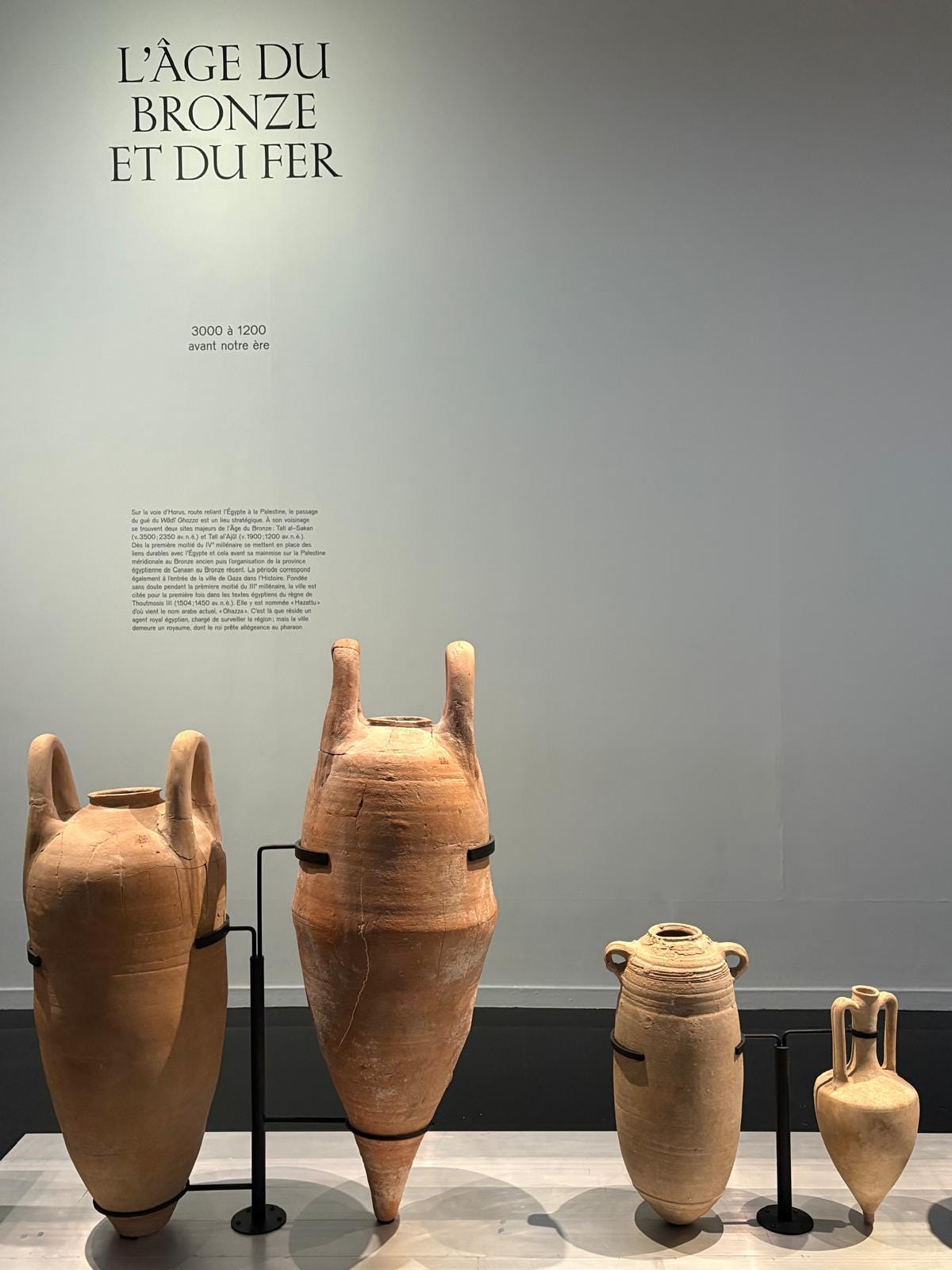
Just hours before heading back to London, I journeyed to the Institut du Monde Arabe to visit the exhibit Treasures Saved from Gaza: 5000 Years of History, a collection of nearly 600 objects rescued from years of continued destruction. From wine amphorae and oil lamps, to mosaics, statues and a tiny carved beetle from the Iron Age, the ability to view these objects was a bold recentering and an amplification of our why. Art can be a powerful tool that preserves aspects of history otherwise forgotten, censored, or erased. It places our shared humanity, in all its fragility and endurance, right at the center.
This trip reminded us that art is more than just for art’s sake: artists continue to shape how history will remember us, creating a language of resistance and a record of survival. As for those of us who participate by collecting, curating, or championing their work, our responsibility is to ensure these stories are not only seen, but sustained. That is, and will always be, the heartbeat of I&I Worldwide.